

NE ARIYORSUN?
Castings used for structural components that must maintain performance under extreme pressure and temperature fluctuations.
Typical gravity-cast aerospace parts:
Support brackets and hinges for aircraft structures
Pump housings and compressor covers
Heat-resistant covers for engine components
Industrial equipment and machinery
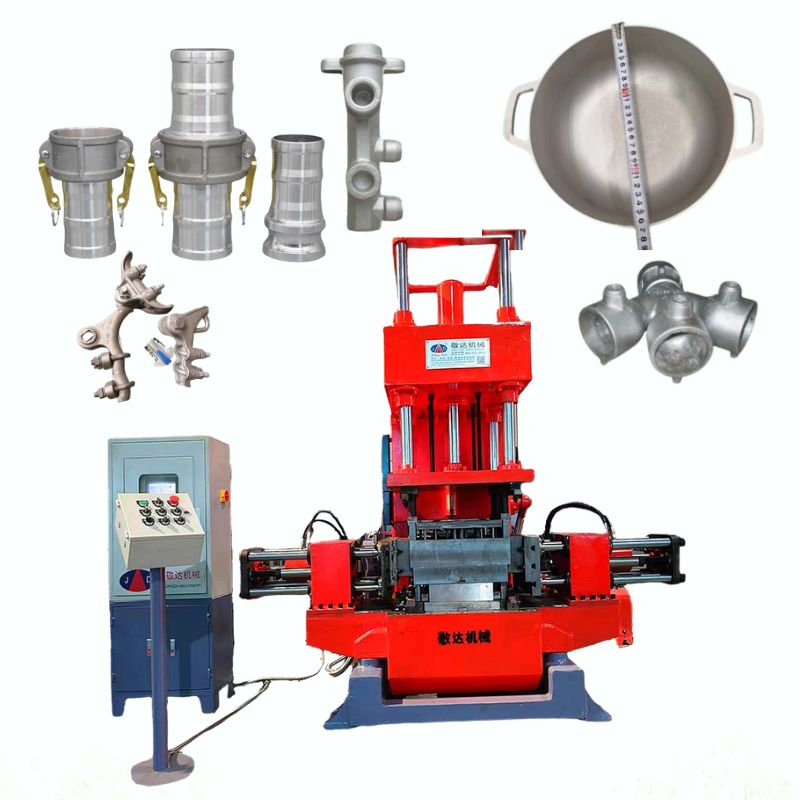
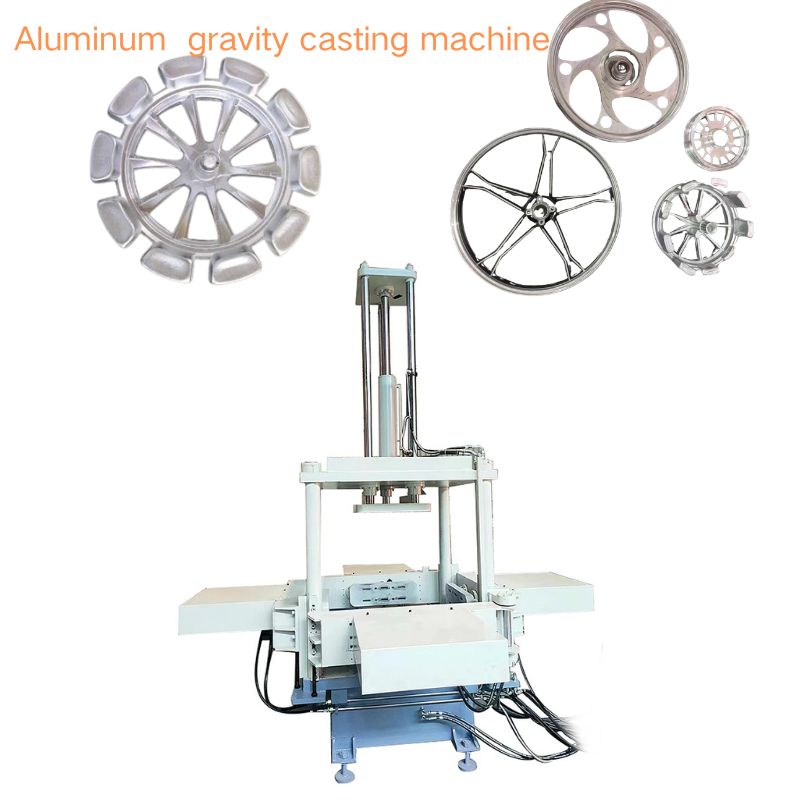
Industrial manufacturers utilize gravity die casting for its durability, reliability, and production efficiency when manufacturing medium-volume mechanical parts.
Examples include:
Pump bodies and impellers
Valve housings, manifolds, and pipe fittings
Hydraulic housings and actuator mounts
Motor housings and fan blades
Marine and desalination equipment
The marine industry benefits from gravity casting for parts requiring corrosion resistance and strength in saltwater environments.
Gravity-cast marine parts include:
Heat exchangers and water-cooled engine components
Pump assemblies and fluid control equipment
Propeller blades and nozzles
Deck fittings and gear housings
Electronic and electrical systems
For electrical systems requiring high conductivity, gravity casting can produce components with minimal internal defects and high dimensional accuracy.
Typical applications:
Busbars and electrical terminals
Connector blocks
Housings for power distribution units
Cooling plates for power electronics
Architectural and decorative hardware
Gravity die casting is well-suited for ornamental and structural elements where aesthetic quality and dimensional consistency are paramount.
Common architectural uses:
Railings, balusters, and door handles
Lighting fixtures and lamp housings
Faucets and decorative fittings
8. Gravity Die Casting vs. Other Casting Methods
To understand the advantages and limitations of gravity casting, it is essential to compare it with other widely used casting methods: pressure die casting, investment casting, centrifugal casting, and squeeze casting.
Each method serves different purposes based on design complexity, mechanical properties, cost, and production volume.
Gravity Die Casting vs. Pressure Die Casting
Fundamental differences:
Gravity casting relies solely on gravity to fill the mold.
Pressure die casting forces molten metal into the mold cavity under high pressure. (typically 10–150 MPa).
Comparison:
Criterion Gravity Die Casting Pressure Die Casting
Mold Type Permanent metal mold Steel (usually more complex)
Metal Flow Gravity-fed (low turbulence) Forced under pressure (fast, potentially turbulent)
Alloy Suitability Aluminum, copper, magnesium Zinc, aluminum, magnesium (not suitable for copper)
Part Integrity Better metallurgical quality (lower porosity) Higher porosity
Surface Finish Good, but not as smooth as pressure die casting Excellent surface quality
Cost Moderate tooling and cycle costs High tooling costs, but fast cycle times
Typical Applications Medium-volume structural components High-volume, thin-walled precision parts
Conclusion:
Gravity die casting is ideal for medium-volume production where high structural integrity takes precedence over surface finish or speed.
Pressure die casting suits high-volume, complex-geometry parts requiring tight tolerances and superior finishes.
Gravity Die Casting vs. Investment Casting (Lost-Wax)
Basic Difference:
Gravity casting uses reusable metal molds.
Investment casting uses a disposable ceramic mold formed around a wax pattern.
Comparison:
Criterion Gravity Die Casting Investment Casting
Detail Reproduction Moderate; limited by metal mold machining Excellent; allows for complex, intricate designs
Surface Finish Good (Ra ≈ 3–6 μm) Superior (Ra ≈ 1.5–3 μm)
Tooling Cost Moderate initial mold cost High pattern/tooling cost per part
Production Volume Best for medium to high volumes Best for low to medium volumes
Tolerances Typically ±0.3–0.5 mm Achievable ±0.1–0.3 mm
Alloy Flexibility Aluminum, copper, magnesium Most metals, including steel and superalloys
Conclusion:
Gravity die casting is more cost-effective for medium- to high-volume production. Investment casting is better suited for small runs requiring high precision and intricate detail.
Gravity Die Casting vs. Centrifugal Casting
Basic Difference:
Gravity Casting: Uses a stationary mold filled by gravity.
Centrifugal Casting: A rotating mold forces metal outward into the cavity.
Comparison:
Criteria | Gravity Casting | Centrifugal Casting
Optimal Geometry | Flat, prismatic, or moderately complex parts | Cylindrical, symmetrical parts
Porosity Level | Low (especially with bottom filling) | Very low – impurities/gas pushed to the center
Mechanical Properties | Good grain structure | Excellent grain refinement and density
Applications | Housings, brackets, pump bodies | Bushings, pipes, rings, liners
Conclusion:
Use gravity mold casting for versatile shapes and medium-to-high production volumes. Choose centrifugal casting for rotationally symmetrical parts requiring excellent structural integrity.
Gravity Mold Casting vs. Squeeze Casting
Basic Difference:
Squeeze Casting: Combines casting with high pressure during solidification.
Gravity Casting: Uses no applied pressure.
Comparison:
Criteria | Gravity Casting | Squeeze Casting
Solidification Control | General | Excellent – pressure reduces porosity
Mechanical Strength | Good | Very high – superior quality
Tooling Complexity | Moderate | High – requires precise pressure control
Alloy Types | Primarily non-ferrous | Aluminum, magnesium, composites
Cost | Lower | Higher equipment and cycle costs
Conclusion:
Gravity mold casting is more economical and easier to implement. Choose squeeze casting when excellent strength and ductility are required; it often replaces forged components.
9. Conclusion
Gravity mold casting remains a versatile, cost-effective, and reliable production technology for medium-volume manufacturing of moderately complex metal parts.
By leveraging the gentle flow of gravity, precise mold design, and tailored process controls, manufacturers achieve a compelling combination of surface quality, dimensional accuracy, and mechanical integrity.
As advanced simulation, hybrid molding, and new alloy development gain traction... Gravity die casting will continue to evolve, cementing its pivotal role in high-value manufacturing.
At Wolf River, we are ready to partner with you to leverage these advanced technologies to optimize your component design, material selection, and production workflows.
Ensure your next project surpasses every performance and sustainability benchmark.